
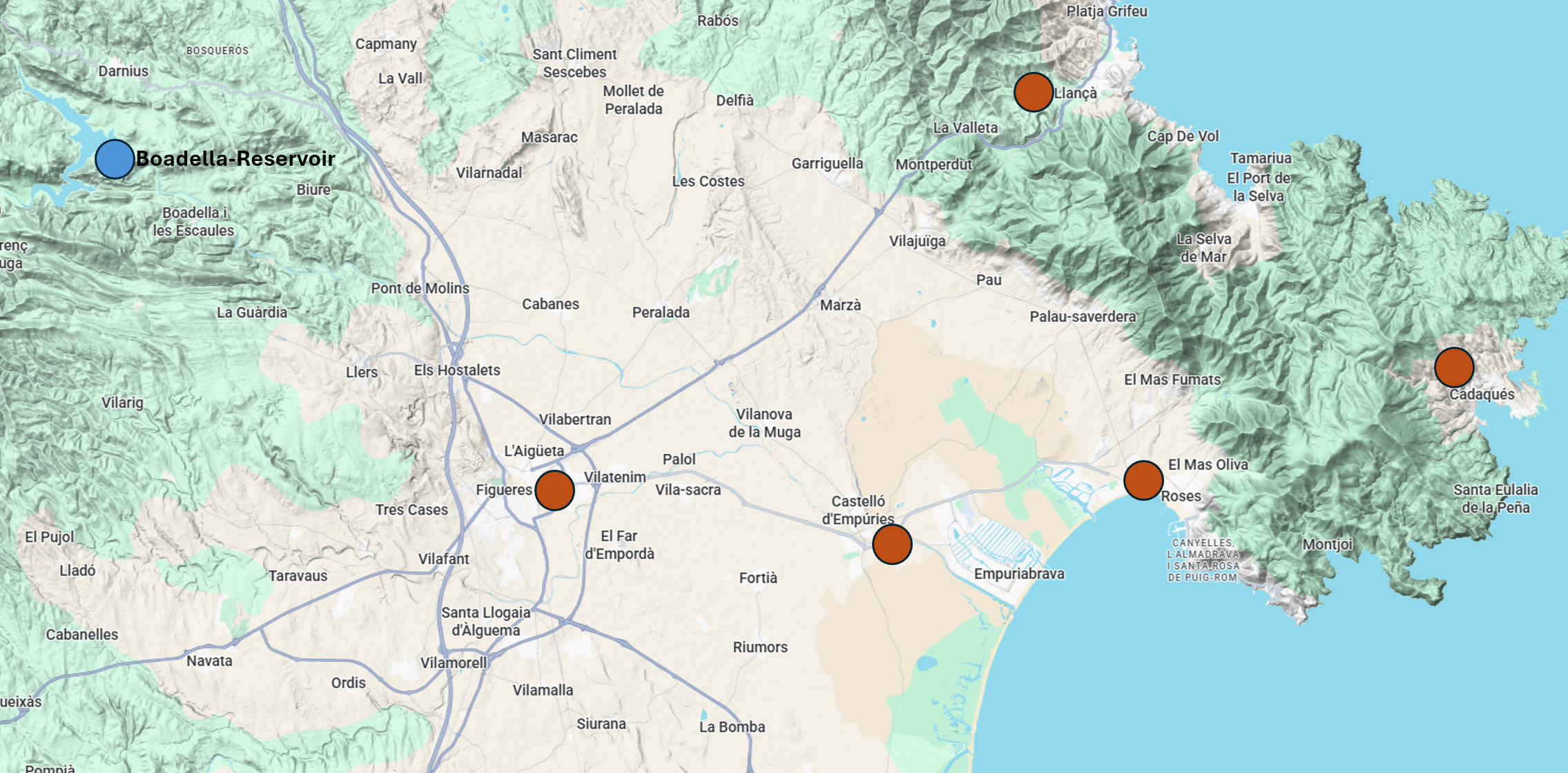
Map of the Muga catchment area
Source: Google maps
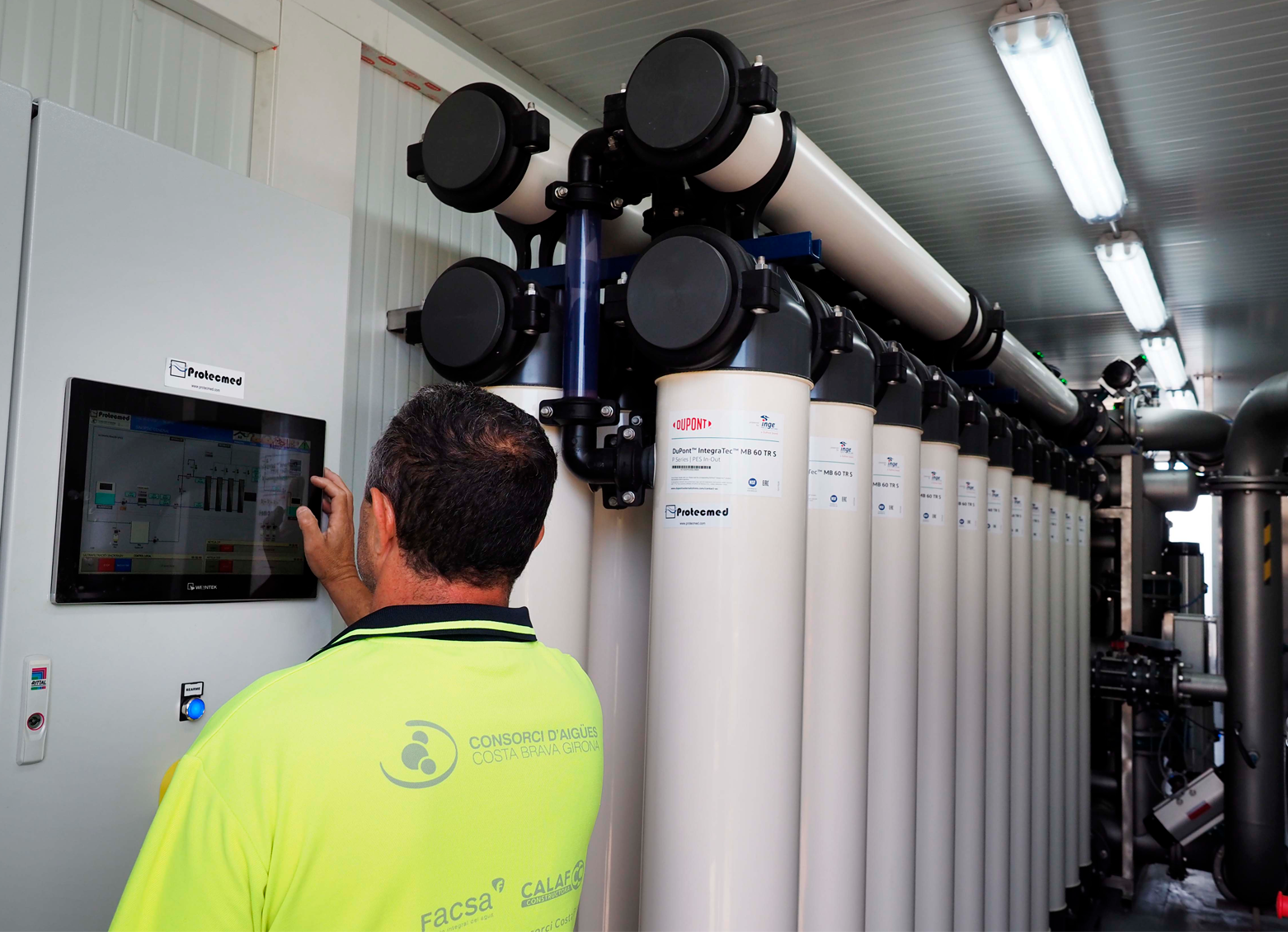
AIGUANEIX Pilot Plant in Roses
Source: Consorci d'Aigües Costa Brava Girona
Description
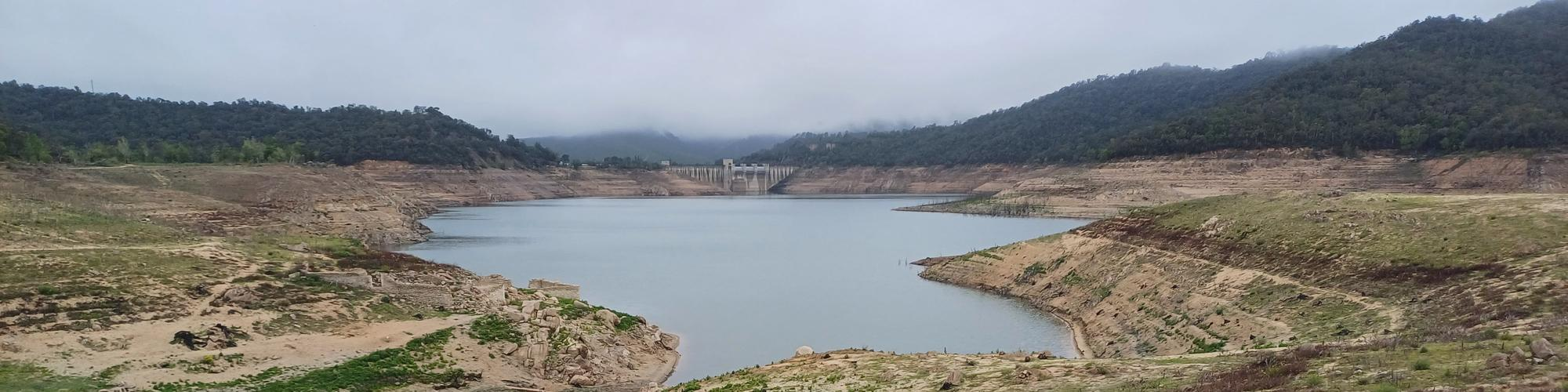
The Costa Brava Case Study is located on the northeastern Mediterranean coast of Spain and focuses on the Muga catchment with a total area of approx. 854 km2. The Muga river has an overall length of 64km, 1 large reservoir (Darnius-Boadella Reservoir) and 17 smaller dams and interruptions. The reservoir has a storage capacity of approximately 61 hm³ and supplies water to the area along with groundwater for domestic, agricultural and industrial use. The drinking water supply, wastewater management and sewer system is managed by Fisersa (Figueres de Serveis SA, Empresa plurimunicipal de Figueres) for Figueres and CACBGi (Concorci d’Aigües Costa Brava Girona) for Roses, Empuriabrava, Cadaques and Llança.The land use in this catchment is divided into 58% mixed forest area, 37% agricultural land and 5% urban use.
Figueres is the largest urban centre in the catchment, with a permanent population of approximately 50,000 inhabitants and only minor seasonal fluctuations due to tourism. In contrast, Roses and Empuriabrava are the principal tourist destinations in the region, experiencing substantial seasonal population increases. The population of Empuriabrava rises from around 8,000 permanent residents to approximately 80,000 during peak tourist periods, while the population of Roses increases from about 15,000 to 65,000 inhabitants. Cadaques and Llança are smaller population/tourism hubs, which takes water out of the Muga catchment without returning treated wastewater back into the system.
The region is subject to significant water stress driven by climate change, population and tourism projections, seasonal peaks in demand, prolonged drought periods, seawater intrusion and aquifer salination due to overexploitation of groundwater resources. Future projections for water demand indicate a potential net increase for all sectors (industry, agriculture, tourism and general population) by 60-100% by 2075 due to rising temperatures and decreased precipitation, although sustainable practices and technological advances might mitigate some of these demands. Future heatwaves, droughts and overexploitation will put more pressure on surface and groundwater resources.
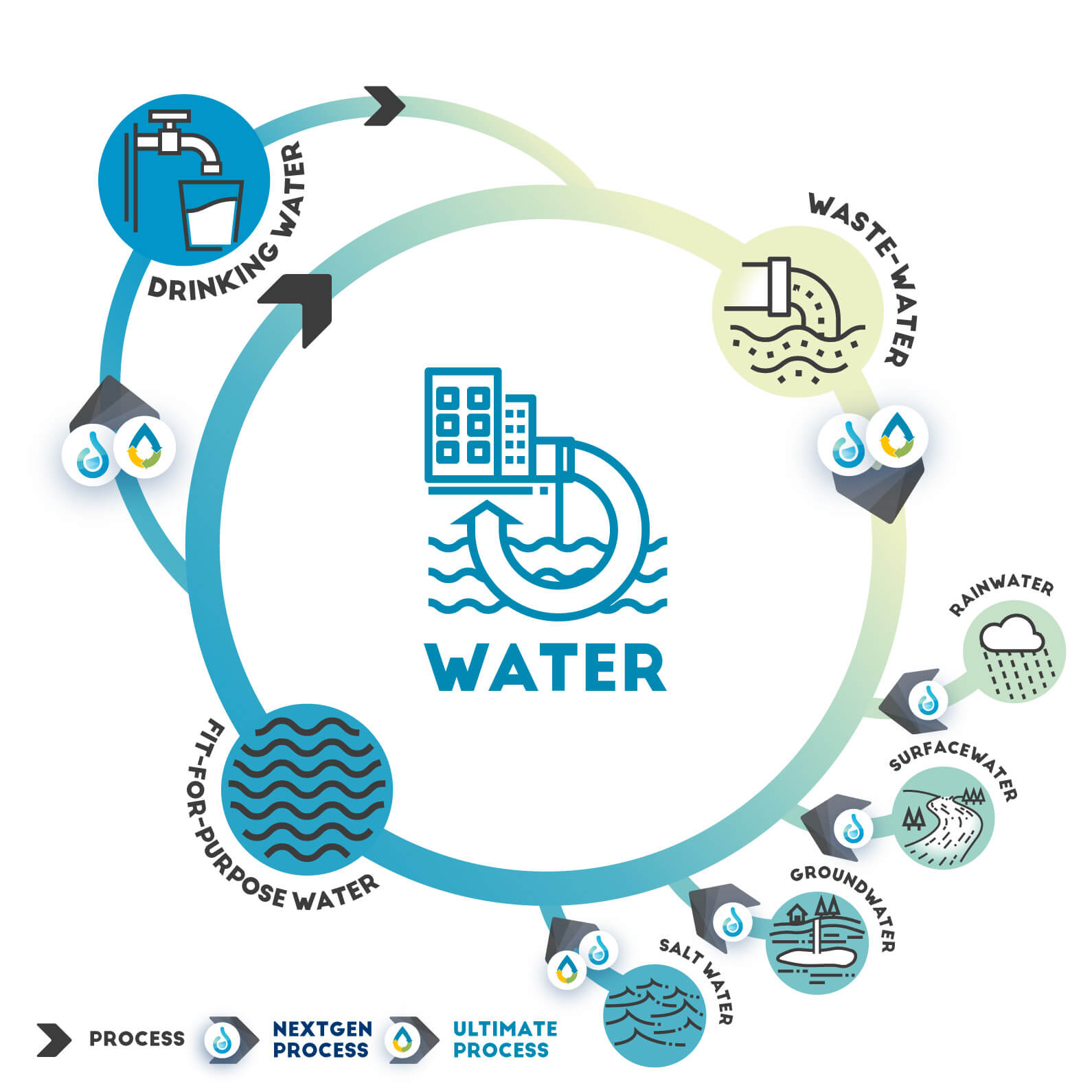
Under the RECREATE project, the Muga catchment is represented as an integrated socio-hydrological system using UWOT (Urban Water Optioneering Tool), incorporating the principal water users and water resources to evaluate baseline conditions and future water demand scenarios. Alternative water resources (AWRs), including desalination, potable and non-potable water reuse, rainwater harvesting, and green-to-blue water forest management strategies, are incorporated to assess their contribution to water availability under contrasting socioeconomic futures. The modelling framework quantifies the effects of these interventions on water security, system resilience, groundwater dependency, environmental flows, and the reliability of water supply, thereby supporting the evaluation of adaptive water management strategies and their capacity to mitigate emerging water scarcity risks.
Applied technologies
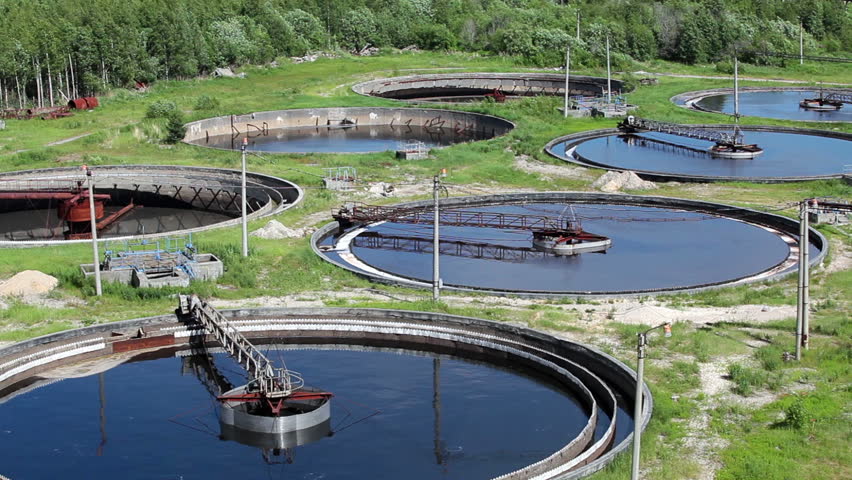
Facts of the applied technologies
A pilot plant used under the AIGUANEIX project demonstrated the possibility of treated water for indirect potable reuse. This pilot plant at the Roses WWTP applies a multi-barrier treatment train consisting of chloramination, ultrafiltration, reverse osmosis, advanced oxidation, activated carbon filtration, and remineralisation to produce highly purified water suitable for aquifer replenishment. The technology offers a highly drought-resilient source with comparatively low environmental footprint relative to new water abstractions, although it requires advanced treatment, monitoring infrastructure, and strong public acceptance.
Seawater desalination provides a climate-independent source of potable water through reverse osmosis treatment of Mediterranean seawater. Desalination plants can supply drinking water directly into regional distribution networks and are particularly valuable during prolonged drought periods when reservoir storage and groundwater levels decline simultaneously. For the northern Costa Brava, desalination represents a strategic emergency and base-load supply capable of supporting urban populations and tourism peaks. Key technical challenges include high energy consumption, greenhouse gas emissions depending on the electricity mix, membrane fouling, and management of concentrated brine streams. Despite these constraints, desalination provides one of the most reliable and scalable alternative water resources because water production is largely independent of rainfall variability.
Municipal-scale rainwater harvesting involves the systematic collection of runoff from roofs, public buildings, roads, and other impervious urban surfaces, with storage in centralized reservoirs or distributed storage tanks. The harvested water can be used for non-potable municipal applications such as irrigation of parks and green spaces, street cleaning, urban landscaping, and other municipal services, thereby reducing demand for potable water. The main technical limitation is the seasonal mismatch between rainfall occurrence and summer demand, requiring substantial storage capacity. Nevertheless, municipal rainwater harvesting offers a decentralized solution that reduces pressure on drinking water supplies while simultaneously contributing to urban flood and stormwater management.
Green-to-blue water management seeks to increase runoff, groundwater recharge, and streamflow by restoring ecosystem function in the upper Muga watershed. The approach focuses on forest management, river restoration, wildfire risk reduction, soil regeneration, and landscape-scale ecological restoration across the Muga Valley. Improved forest structure, reduced fuel loads, restored river corridors, and healthier soils can enhance the regulation of water flows, increase drought resilience, and improve water availability downstream. As a nature-based solution, implementation is governed by forestry regulations, Natura 2000 conservation requirements, river basin management plans, and ecosystem restoration policies at Catalan, Spanish, and EU levels. Compared with engineered infrastructure, benefits develop gradually and are more difficult to quantify, but they simultaneously deliver co-benefits including biodiversity protection, carbon sequestration, reduced wildfire risk, improved soil health, and enhanced landscape resilience. Consequently, green-to-blue water management represents a complementary long-term strategy that addresses the underlying ecological drivers of water scarcity rather than solely increasing supply.
Technology performance and best practices
Currently, no Alternative Water Resources (AWRs) are implemented in the Muga catchment case study. However, several projects are planned for implementation within the next 5-10 years, including a desalination plant for Empuriabrava and a water reuse scheme with managed aquifer recharge in Llançà. Further expansion of water reuse infrastructure in Figueres, Empuriabrava, Roses, and Cadaqués is expected to enhance drinking water security and increase system resilience during drought periods. Nevertheless, these solutions are associated with higher operational costs, primarily due to their energy requirements.
Other AWR options, such as municipal rainwater harvesting and green-to-blue water forest management, are currently at an early stage of development and are therefore expected to require longer implementation timelines. While municipal rainwater harvesting entails additional infrastructure investments, it has considerable potential to reduce potable water demand for non-potable uses, particularly urban irrigation and municipal cleaning services.
Key lessons
Reuse Water Treatment Pilot Plant:
- The pilot plant installed at the Roses WWTP employed a multi-barrier treatment train consisting of chloramination, ultrafiltration, reverse osmosis, advanced oxidation, activated carbon filtration, and remineralisation. This treatment scheme produced highly purified water that met drinking water quality standards for aquifer recharge. The combined barriers were highly effective in removing microbiological contaminants and trace organic pollutants, reducing concentrations to levels well below regulatory requirements and, in most cases, below the limits of quantification and detection. Furthermore, the system demonstrated a high degree of robustness, as drinking water quality standards were maintained even in the event of the failure of an individual treatment barrier.
Low-energy desalination processes:
- In RECREATE, innovative, low-energy desalination processes using advanced membranes are tested at laboratory scale. The processes are modelled using test results to estimate energy consumption under different operating conditions. Their performance can also be assessed through product water quality, water recovery rate and brine volume, while good practice includes effective pretreatment, monitoring membrane fouling and scaling, and managing the brine accordingly.
Soft Sensor development:
- Soft sensor estimate water-quality parameters that are not measured continuosly, such as trihalomethanes (THMs), using available sensor data and statistical or machine-learning models. From a direct potable reuse (DPR) perspective, they can help monitor reclaimed water as it is treated for potential drinking water use and support timely assessment of water quality. The model combines online measurements, such as dissolved organic carbon, conductivity and salinity, temperature, and pH to estimate the target parameter. Its peformance is assessed by comparing estimates with laboratory results across different operating conditions. Good practice includes training the model with representative data, validating it regularly against laboratory analyses and updating it when conditions change; soft sensors complement, rather than replace, required analytical testing.
UWOT:
- UWOT can be used to model the catchment, although it is not fundamentally intended for that purpose. It can be used to model the efficiency of implemented alternative water resources under various different socio economic pathways.
Legislation and policy recommendations
Drinking-water production in Catalonia is primarily regulated by the Royal Decree 3/2023 (https://www.boe.es/eli/es/rd/2023/01/10/3), which transposes Directive (EU) 2020/2184 (http://data.europa.eu/eli/dir/2020/2184/oj) into Spanish law. It establishes technical and health requirements for drinking-water quality, risk-based management across the supply chain, monitoring and control programmes, and public reporting. Catalonia complements this national framework through drought-management measures and the River Basin Management Plan for the internal basins of Catalonia 2022–2027 (aca.gencat.cat/es/Plans-i-programes/) which promotes supply security, desalination, water reuse, infrastructure improvements and distribution-network efficiency. Together, these measures aim to maintain a safe and reliable drinking-water supply under increasing drought, climate and seasonal-demand pressures.
Water reuse is regulated nationally by Royal Decree 1085/2024 (https://www.boe.es/eli/es/rd/2024/10/22/1085/con), which establishes requirements for producing, supplying and using reclaimed water, including authorisation, water-quality monitoring and risk-management obligations. It permits reclaimed water for agricultural, industrial, urban non-potable, recreational and environmental applications when the relevant quality requirements are met. Direct human consumption is prohibited except during an officially declared catastrophe, while use in hospitals, shellfish cultivation and artificial bathing facilities is also prohibited. At EU level, Regulation (EU) 2020/741 (http://data.europa.eu/eli/reg/2020/741/oj) establishes minimum quality, monitoring and risk-management requirements specifically for reclaimed water used in agricultural irrigation.
At the regional level, the Catalan Water Agency’s Water Reuse Plan: Strategy 2040 promotes new reclamation facilities, expanded distribution networks, agricultural and municipal reuse, industrial applications and managed aquifer recharge. The plan targets capacities of approximately 245 hm³ per year of direct reuse and 186 hm³ per year of indirect reuse by 2040. These measures are intended to reduce dependence on rainfall and conventional freshwater resources, improve drought resilience and support the transition towards more circular water management
Applied product
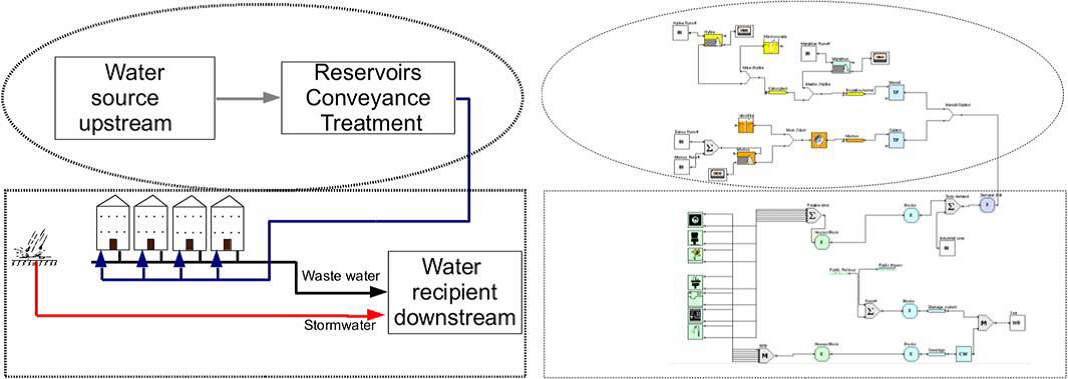
Urban Water Optioneering Tool
UWOT is a decision-support tool that allows users to compare different water management technologies (including water s…
Publications and references
W. Gernjak, A. Daaboub, N. Klamerth, Á. Bosch, A. Pedregal Montes, R. Mercado Bettin, E. Hernández Busto, Q. Plana Puig, A. Kleyböcker (2025). Future water supply availability and demand based on different RCP scenarios. D1.1 RECREATE, ICRA, Girona, Spain, 84 p.